
Software Supply Chain Security: A Practical Guide for 2026
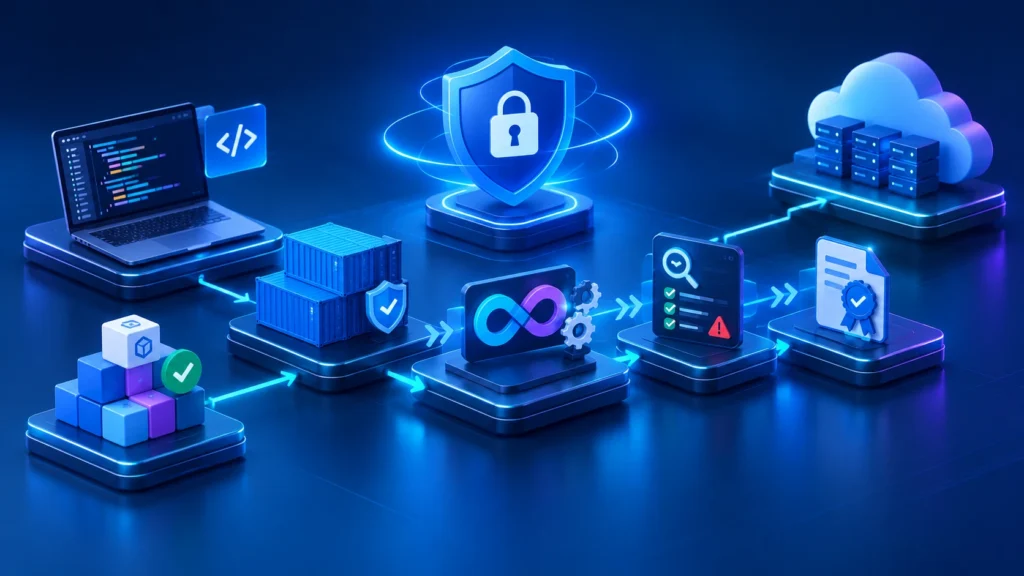
Software Supply Chain Security: How Businesses Can Protect Modern Applications in 2026
Modern applications are rarely built entirely from code written by one development team. They rely on open-source libraries, third-party packages, external APIs, container images, cloud services, and increasingly, AI-generated code. These components help businesses build and release software faster, but they also introduce risks that are easy to overlook.
A vulnerability in a single dependency or a compromised build tool can affect an entire application. That is why software supply chain security has become an important part of building reliable digital products.
What Is Software Supply Chain Security?
Software supply chain security is the practice of protecting every component, tool, process, and service involved in developing, building, and delivering an application.
It goes beyond checking the code written by developers. It also considers the external packages an application uses, the systems that build it, the credentials used during deployment, and the infrastructure where the software runs.
A typical application may depend on hundreds of external components. Each dependency creates a relationship that needs to be understood and managed. If one of those components is compromised, the risk can extend to every application that uses it.
For businesses, the objective is straightforward: understand what goes into their software, verify where it comes from, identify weaknesses early, and maintain control throughout the software development lifecycle.
Why Software Supply Chain Security Matters in 2026
Modern development practices have made software delivery faster and more interconnected. Teams use open-source packages to avoid rebuilding common functionality, cloud platforms to scale applications, and automated pipelines to release updates more frequently.
AI coding assistants are adding another source of code to this environment. While these tools can improve development speed, their output still needs to be reviewed, tested, and checked for security issues.
Recent industry research highlights the scale of the challenge. Docker’s 2026 software supply chain security report, based on research by Omdia, found that 77% of surveyed organizations had experienced a software supply chain incident in the previous 12 months. The report also identified AI technology as a leading supply chain risk for organizations.
These findings show why security cannot stop at the application code itself. Businesses need visibility into the complete process used to create and deliver their software.
Where Do Software Supply Chain Risks Come From?
1. Vulnerable Open-Source Dependencies
Open-source libraries help development teams build features without starting from scratch. However, a package may contain a known vulnerability, become unmaintained, or receive a malicious update.
Indirect dependencies also matter. An application may use a trusted library that relies on several other packages. A vulnerability in one of those underlying components can still affect the application.
Teams should maintain an inventory of dependencies, review package updates, remove unused libraries, and monitor security advisories.
2. Third-Party Services and APIs
Applications commonly connect to payment providers, identity platforms, analytics services, communication tools, and other external APIs. These integrations introduce dependencies beyond the development team’s direct control.
Businesses should evaluate the security practices of important providers, protect API credentials, limit permissions, and monitor changes to external services.
3. Insecure Build and Deployment Pipelines
CI/CD pipelines automate activities such as testing, packaging, and deployment. They also have access to source code, credentials, and production environments. If pipeline permissions are too broad or secrets are exposed, an attacker may be able to interfere with software releases.
Build systems should use restricted permissions, protected secrets, controlled deployment approvals, and clear separation between development, staging, and production environments.
4. Compromised Packages and Development Tools
Developers often install packages and tools from public repositories. Attackers may publish malicious packages, compromise legitimate maintainers’ accounts, or exploit weaknesses in package distribution systems.
Teams should use trusted package sources, review unexpected package changes, scan dependencies, and establish policies for adding new tools to development environments.
5. AI-Generated Code
AI coding tools can generate functions, suggest libraries, and accelerate development tasks. However, generated code is not automatically secure or correct. It may contain insecure patterns, outdated dependencies, or code that does not follow the application’s security requirements.
AI-generated code should go through the same review, testing, and security checks as code written manually. Developers should also avoid sharing confidential source code, credentials, or sensitive business data with AI tools that are not approved for that purpose.
Practical Strategies to Strengthen Software Supply Chain Security
1. Maintain a Software Bill of Materials
A Software Bill of Materials, commonly called an SBOM, is an inventory of the components included in a software product. It can identify open-source packages, versions, and other dependencies used by an application.
With an accurate SBOM, teams can more quickly determine whether an application uses a component affected by a newly disclosed vulnerability. It also supports software audits, risk assessments, and ongoing maintenance.
Businesses should generate and update SBOMs as part of their development and release processes rather than treating them as a one-time document.
2. Automate Dependency and Vulnerability Scanning
Manually checking every dependency is difficult, especially when applications receive frequent updates. Automated software composition analysis and vulnerability scanning can help identify vulnerable packages earlier.
Scanning should cover direct and indirect dependencies, container images, and relevant build artifacts. Teams should also prioritize findings based on exploitability, application exposure, and business impact instead of treating every alert as equally urgent.
3. Secure the CI/CD Pipeline
Security checks should be integrated into the same workflows developers use to build and release software. This makes security a continuous activity rather than a final review before deployment.
- Require code reviews for important changes.
- Run automated tests and security scans during builds.
- Protect deployment credentials and rotate secrets regularly.
- Apply least-privilege permissions to build agents and workflows.
- Restrict who can approve and deploy production releases.
- Keep build tools and pipeline dependencies updated.
These controls help reduce the chance that a compromised component or unauthorized change will reach production unnoticed.
4. Verify the Origin and Integrity of Software Artifacts
Knowing which components are included in an application is important, but businesses should also understand how the application was built.
Build provenance provides information about the source code, build process, and environment used to create an artifact. Digital signatures and verification processes can help teams confirm that software has not been altered unexpectedly between build and deployment.
Organizations can use established supply chain security practices and frameworks, such as SLSA, to improve the integrity and traceability of their software builds.
5. Use Secure Container Images
Containers make it easier to package and deploy applications consistently, but container images can contain outdated operating system packages, vulnerable libraries, or unnecessary tools.
Use trusted base images, keep them updated, scan images before release, and avoid including unnecessary components. Restrict access to container registries and ensure that production deployments use verified images.
6. Establish Clear Rules for AI-Assisted Development
As AI becomes part of everyday software development, organizations need practical rules for its use. Developers should understand which tools are approved, what information can be shared, and how generated code must be validated.
AI-generated code should be reviewed for security, licensing, correctness, and compatibility. Automated testing and established code review processes remain essential, regardless of how the code was produced.
7. Prepare for Vulnerability Response
Even well-managed software can contain vulnerabilities. A strong security program needs a clear process for responding when a weakness is discovered in an application or one of its dependencies.
Teams should know which applications use an affected component, who is responsible for assessing the risk, how fixes will be tested, and how updates will be deployed. Monitoring and incident response procedures should be reviewed regularly.
How to Integrate Supply Chain Security Into the Software Development Lifecycle
Supply chain security works best when it is included in everyday engineering activities. Businesses do not need to introduce every control at once. They can improve their security posture through a gradual, structured approach.
Planning and Design
Identify critical application components, external services, data flows, and security requirements. Establish standards for approved dependencies and third-party integrations.
Development
Use trusted repositories, review dependency changes, protect developer credentials, and apply secure coding practices. Make sure developers understand how to use AI coding tools responsibly.
Build and Testing
Generate SBOMs, scan dependencies and container images, run automated security tests, and verify build configurations. Make security checks part of the CI/CD pipeline.
Release and Deployment
Verify release artifacts, restrict production access, protect deployment credentials, and maintain a record of approved releases. Ensure that teams can identify exactly which version is running in each environment.
Monitoring and Maintenance
Monitor vulnerability disclosures, review dependency updates, assess third-party risks, and maintain a process for applying security fixes. Revisit security policies as the application and its dependencies evolve.
Common Mistakes Businesses Should Avoid
Organizations can invest in security tools and still leave important gaps if their processes are inconsistent. Some common mistakes include:
- Scanning only direct dependencies: Indirect dependencies can introduce vulnerabilities too.
- Generating an SBOM only once: Software inventories become outdated as applications change.
- Ignoring build infrastructure: A secure application can still be compromised through an insecure pipeline.
- Trusting AI-generated code without review: Generated code needs testing and security validation.
- Reacting to every vulnerability in the same way: Teams should prioritize based on actual exposure and business risk.
- Leaving security until release: Finding issues earlier generally makes them easier to investigate and fix.
Building a More Secure Software Future
Software supply chain security is no longer limited to large technology companies or dedicated cybersecurity teams. Any business that builds, maintains, or operates modern applications needs to understand the components and processes behind its software.
Open-source libraries, third-party integrations, cloud infrastructure, automated pipelines, and AI-generated code all contribute to the speed of modern development. They also make it important to establish clear security practices across the entire software lifecycle.
By maintaining software inventories, automating security checks, protecting build pipelines, verifying artifacts, and preparing for vulnerability response, businesses can reduce risk without slowing down development unnecessarily.
The goal is not to eliminate every possible risk. It is to build software with greater visibility, stronger controls, and the ability to respond quickly when something changes.
How Expoders Can Help
At Expoders, we help businesses design, develop, modernize, and maintain software applications with a focus on quality, performance, and long-term reliability.
From custom web applications and SaaS platforms to API integrations, cloud deployment, and ongoing product development, our team considers security and maintainability throughout the development process.
If you are planning a new software product or looking to strengthen an existing application, connect with Expoders to discuss your requirements.