
Privacy by Design: A Guide to Privacy Engineering in 2026
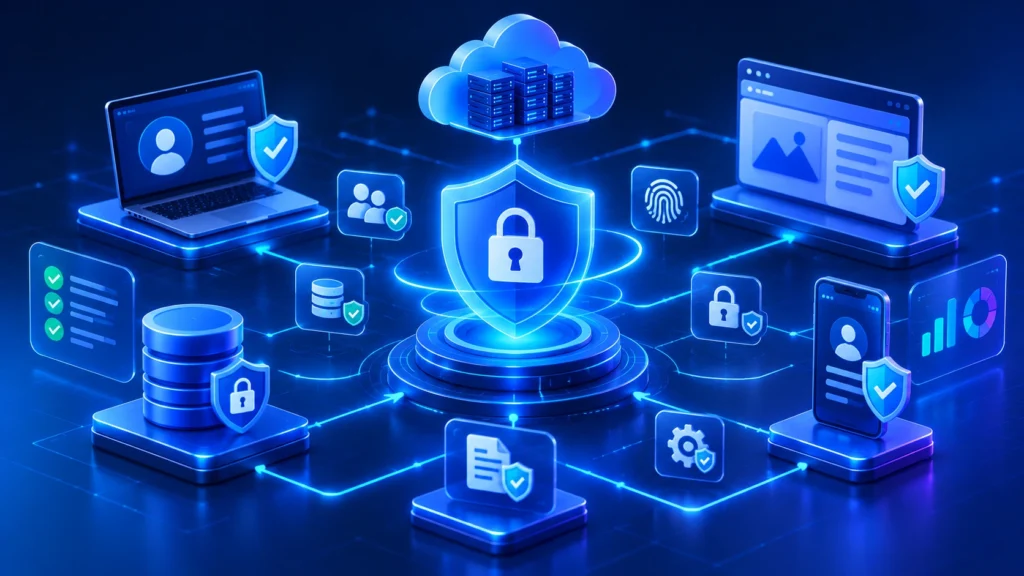
Privacy by Design: How Privacy Engineering Is Changing Software Development in 2026
Privacy is no longer something businesses can afford to consider only after a product has been developed. Websites, mobile applications, SaaS platforms, and AI-powered products collect and process personal information throughout their operations. As these products become more connected, protecting that information requires deliberate decisions at every stage of software development.
This is where privacy engineering comes in. Instead of treating privacy as a legal checklist or a final security review, privacy engineering makes data protection part of a product’s architecture, development process, and everyday operation.
What Is Privacy Engineering?
Privacy engineering is the practice of designing, building, and maintaining technology systems that protect personal information. It combines software architecture, security controls, data management, and privacy principles to reduce unnecessary data collection and limit how information can be accessed or used.
For example, an application that collects a customer’s location should have a clear reason for needing that information. It should request permission when appropriate, collect only the level of detail required, restrict access, and avoid retaining location history longer than necessary.
The goal is not simply to prevent data breaches. It is to make responsible data handling a normal part of how software works.
Why Privacy Engineering Matters More in 2026
Modern applications rarely operate in isolation. A single product may connect to cloud infrastructure, analytics platforms, payment providers, marketing tools, mobile devices, and AI services. Each connection can introduce another place where personal information is collected, transferred, stored, or processed.
Recent industry research reflects this growing focus. The Cloud Security Alliance’s 2026 research on data privacy engineering examines privacy by design, privacy-enhancing technologies, data security operations, and data lifecycle management. The OECD’s 2026 Digital Economy and Society Outlook also explores technologies that help organizations protect confidentiality while enabling responsible data use and sharing.
For software businesses, this creates several practical reasons to strengthen privacy engineering:
- Growing data exposure: More integrations and services mean more systems may handle customer information.
- Customer expectations: Users increasingly expect clear explanations of what information is collected and how it is used.
- Regulatory responsibilities: Businesses must understand the privacy requirements that apply to their users, markets, and data processing activities.
- AI adoption: AI features can introduce new data flows involving prompts, uploaded files, model providers, and generated outputs.
- Operational risk: Poor data handling can lead to incidents, service disruption, remediation costs, and loss of customer confidence.
Privacy by Design: The Principles Behind Better Software
Privacy by design means considering privacy requirements when defining a product, choosing its architecture, and implementing its features. It is much easier to build appropriate controls into a system from the beginning than to retrofit them after sensitive information has spread across multiple services.
1. Collect Only the Data You Need
Data minimization is one of the most practical privacy principles. Applications should collect information that is necessary for a clearly defined business or product purpose.
For example, a basic newsletter subscription may require an email address, but it does not automatically need a date of birth, home address, or phone number. Removing unnecessary fields reduces the amount of information the business must protect.
2. Make Consent and User Choices Clear
Users should understand when an application requests personal information and why. Consent interfaces should explain relevant choices in plain language rather than hiding important details in lengthy notices.
Where consent is the appropriate legal basis, systems should record the user’s choice and provide a practical way to change it. Consent should not be treated as a substitute for identifying the correct legal basis for every processing activity.
3. Restrict Access to Personal Information
Not every employee, service, or application component needs access to every customer record. Role-based access control, least-privilege permissions, and service-level authorization help limit unnecessary exposure.
Access should be reviewed regularly, particularly when employees change roles, integrations are added, or application permissions evolve.
4. Protect Data Throughout Its Lifecycle
Privacy controls should cover information from collection through storage, use, sharing, archival, and deletion. Encryption, secure backups, retention rules, and controlled deletion processes help protect information at different stages.
Businesses should also understand where copies of personal information exist, including logs, exports, analytics systems, and third-party services.
5. Build Privacy Into Default Settings
Applications should start with sensible privacy settings rather than expecting users to discover and configure every protection themselves. For example, profile visibility, data sharing, and notification preferences should use appropriate defaults for the product and its users.
Practical Privacy Engineering for Modern Applications
Privacy principles become effective when they are translated into concrete engineering controls. The right implementation depends on the product, data sensitivity, architecture, and applicable requirements.
Data Mapping and Classification
Start by documenting what personal information the application collects, where it comes from, which services process it, where it is stored, and who can access it.
Classify information based on sensitivity and business requirements. This makes it easier to decide which fields need encryption, stricter permissions, limited retention, or additional monitoring.
Encryption and Secure Storage
Use modern encryption protocols to protect sensitive information in transit and at rest. Manage encryption keys separately from the data they protect, restrict access to secrets, and establish a process for key rotation.
Applications should avoid storing passwords in plain text. Use established password-hashing algorithms and secure authentication practices instead of designing custom cryptographic mechanisms.
Retention and Deletion Policies
Keeping personal information indefinitely increases the amount of data that could be exposed or misused. Define retention periods based on legitimate business needs and applicable legal obligations.
Deletion workflows should account for primary databases, file storage, derived datasets, and third-party processors. Backup deletion may follow a separate lifecycle, but the policy should explain how deleted information is handled as backups expire.
Audit Logs and Monitoring
Maintain appropriate records of sensitive administrative actions and access to important information. Logs can help identify unusual activity and support investigations, but they should not become another uncontrolled repository of personal data.
Avoid placing passwords, authentication tokens, payment details, or unnecessary personal information in application logs. Protect log access and define retention rules for monitoring data as well.
Privacy Considerations for AI-Powered Applications
AI features introduce additional privacy questions because information may move between an application, an AI model, an external provider, and supporting data services.
Consider an AI assistant that summarizes uploaded documents. Those documents may contain names, financial details, customer records, or confidential business information. Before sending them to a model provider, the application should establish what information is necessary and what controls apply to its processing.
Useful engineering practices include:
- Reviewing what user data is included in prompts and model requests.
- Removing or masking personal information when it is not needed for the task.
- Understanding the AI provider’s data retention and processing terms.
- Restricting access to uploaded documents and generated results.
- Separating customer data between tenants in multi-tenant applications.
- Defining retention and deletion rules for prompts, outputs, and stored conversation history.
- Testing whether AI features reveal information from other users, accounts, or restricted records.
Privacy controls should be designed around the complete AI workflow, not only the model API call.
Privacy-Enhancing Technologies: Going Beyond Basic Security
Privacy-enhancing technologies, often called PETs, can help organizations use or share information while reducing exposure of sensitive details. They do not replace sound architecture or governance, but they can provide additional protection for specific use cases.
- Pseudonymization: Replacing direct identifiers with alternative values so information is less directly linked to an individual. Additional information may still allow re-identification.
- Anonymization: Transforming data so individuals are no longer identifiable, taking into account the risk of re-identification.
- Differential privacy: Adding carefully calibrated statistical noise to help limit what can be learned about an individual from published analysis.
- Federated learning: Training models across distributed data sources without necessarily centralizing all raw training data.
- Secure computation: Using techniques such as secure multiparty computation or homomorphic encryption for selected workloads where computation over protected data is valuable.
Not every application needs advanced privacy technology. Teams should select techniques based on the data, threat model, performance requirements, and business purpose.
How to Add Privacy Engineering to the Software Development Lifecycle
Privacy should be a repeatable engineering activity, not a one-time approval. The following approach can help teams integrate it into product delivery.
Step 1: Identify Data and Product Requirements
During discovery, document the information the product needs, the purpose for collecting it, the users and systems involved, and the applicable privacy requirements. Involve product, engineering, security, and privacy stakeholders early.
Step 2: Review the Architecture
Map data flows between the frontend, backend, databases, cloud services, analytics tools, and external providers. Identify unnecessary transfers and define access boundaries before implementation.
Step 3: Turn Privacy Requirements Into Development Tasks
Translate requirements into specific acceptance criteria. Examples include masking sensitive fields, enforcing tenant isolation, limiting data retention, recording consent where required, and restricting access to administrative endpoints.
Step 4: Test Privacy Controls
Include privacy checks in code reviews and automated testing. Test authorization boundaries, data exports, deletion workflows, consent changes, logging behavior, and third-party integrations.
Step 5: Monitor and Improve
After release, review access patterns, retention behavior, new integrations, and changes in data processing. Reassess privacy controls whenever a product introduces a new feature or changes how information is used.
Common Privacy Engineering Mistakes to Avoid
- Adding privacy controls too late: Retrofitting data protection can require expensive changes to application architecture.
- Collecting information without a clear purpose: Unnecessary data creates avoidable risk and maintenance work.
- Assuming encryption solves everything: Encryption is important, but it does not replace access control, retention, authorization, or responsible data use.
- Ignoring third-party services: External analytics, marketing, storage, and AI providers can all affect how personal information is processed.
- Keeping sensitive information in logs: Debugging systems should not expose credentials or unnecessary customer data.
- Skipping deletion tests: A deletion feature is incomplete if personal information remains in connected systems without a defined reason or lifecycle.
- Treating compliance as a one-time task: Products, integrations, data flows, and applicable requirements change over time.
A Practical Privacy Engineering Checklist
Before launching a new application or major feature, teams can use this checklist to identify important gaps:
- Personal information and data flows are documented.
- Every collected data field has a defined purpose.
- Appropriate legal bases and consent requirements have been reviewed.
- Access follows least-privilege principles.
- Sensitive information is protected in transit and at rest.
- Retention and deletion policies are implemented and tested.
- Third-party processors and integrations have been reviewed.
- Logs and monitoring systems avoid unnecessary personal information.
- AI features have clear data-handling controls.
- Privacy tests are included in the development and release process.
- Teams have a process for reviewing changes to data usage.
Conclusion
Privacy engineering is becoming an essential part of building reliable digital products. As applications connect more services, process more personal information, and introduce AI capabilities, businesses need stronger ways to understand and control how data moves through their systems.
The most effective approach is to make privacy part of product discovery, architecture, development, testing, and ongoing maintenance. Start with clear data requirements, collect only what is needed, enforce appropriate access, protect information throughout its lifecycle, and continuously review how the product handles user data.
At Expoders, we believe secure and scalable software starts with thoughtful engineering decisions. Whether you are developing a SaaS platform, a mobile application, or custom business software, privacy should be considered from the beginning, not added as an afterthought.
Building a new digital product or improving an existing application? Visit Expoders to explore how our software development services can help turn your requirements into reliable digital solutions.