
Edge Computing in 2026: Why Businesses Are Moving Data Processing Closer to the Source
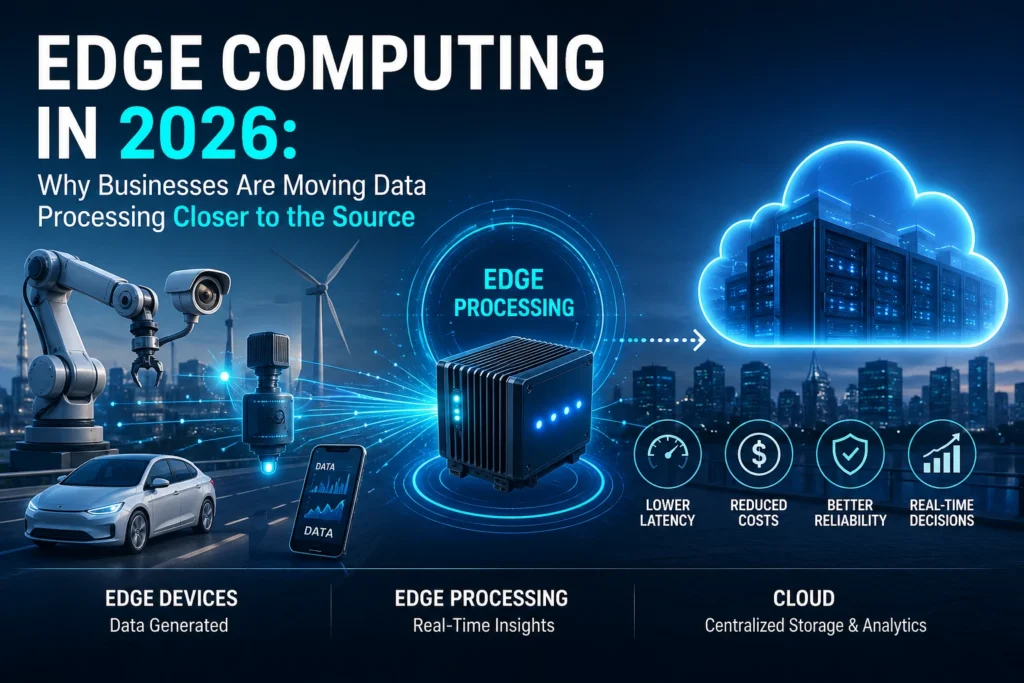
Edge Computing in 2026: Powering Real-Time Applications and Ultra-Fast Digital Experiences
The technology landscape is evolving rapidly. For years, cloud computing has been the backbone of digital transformation, helping businesses scale applications, store data, and improve flexibility.
But in 2026, a new shift is happening alongside cloud adoption: Edge Computing.
As businesses generate massive volumes of real-time data through mobile apps, IoT devices, and connected systems, traditional cloud models are facing limitations. Latency, bandwidth costs, and real-time processing needs are pushing organizations to rethink how data is handled.
This is why edge computing is becoming a key technology trend shaping the future of digital infrastructure.
What Is Edge Computing?
Edge computing is a distributed computing approach where data is processed closer to its source instead of being sent to a centralized cloud or data center.
Traditional Model:
Device → Cloud → Response
Edge Model:
Device → Local Edge Processing → Instant Response
This approach results in:
- Faster processing
- Lower latency
- Reduced bandwidth usage
- Improved reliability
Why Traditional Cloud Models Are Facing Challenges
Cloud computing is powerful, but modern applications often require responses in milliseconds.
Examples:
- Autonomous vehicles need instant decision-making
- Smart factories require real-time machine communication
- Healthcare systems depend on immediate alerts
- Video analytics process large continuous data streams
Sending all data to centralized servers creates bottlenecks, leading to increased latency, higher costs, and slower decisions.
Why Edge Computing Is Trending in 2026
1. Explosion of IoT Devices
Billions of connected devices are generating continuous data streams, including:
- Smart sensors
- Wearables
- Industrial machines
- Connected vehicles
- Smart home systems
Processing all this data in the cloud alone is no longer efficient.
2. Demand for Real-Time Experiences
Modern users expect instant responses such as:
- Real-time tracking
- Instant recommendations
- Live analytics
- Seamless smart-device interactions
Even slight delays can impact user experience and performance.
3. Growth of AI at the Edge
AI is increasingly being deployed directly on devices, enabling:
- Faster predictions
- Offline intelligence
- Reduced dependency on cloud systems
Examples include facial recognition, surveillance systems, and industrial monitoring.
How Edge Computing Works
1. Edge Devices
Devices that generate data, such as cameras, sensors, smartphones, and machines.
2. Edge Nodes or Gateways
Local systems that process data before sending selected information to the cloud. They handle filtering, analytics, and AI inference.
3. Cloud Infrastructure
The cloud is still used for long-term storage, advanced analytics, and centralized control.
Edge computing complements cloud computing, not replaces it.
Real-World Use Cases
Smart Manufacturing
Real-time monitoring, instant failure detection, and optimized production.
Healthcare
Immediate alerts, remote monitoring, and predictive diagnostics.
Retail
Smart checkout, in-store analytics, and real-time inventory management.
Autonomous Vehicles
Split-second decision-making without relying entirely on remote servers.
Technologies Driving Edge Computing
- Azure IoT Edge
- AWS IoT Greengrass
- Google Distributed Cloud
These platforms help deploy applications closer to users and devices.
Business Impact of Edge Computing
- Reduced latency for critical applications
- Lower bandwidth costs
- Faster analytics
- Improved operational efficiency
In many industries, even milliseconds can impact revenue and productivity.
Edge Computing vs Cloud Computing
| Cloud Computing | Edge Computing |
|---|---|
| Centralized processing | Localized processing |
| Best for storage | Best for real-time response |
| Higher latency | Ultra-low latency |
| Highly scalable | Faster decision-making |
The future is hybrid: Cloud + Edge together.
Challenges to Consider
Security Risks
More devices mean larger attack surfaces, requiring strong security strategies.
Infrastructure Complexity
Managing distributed edge systems can be operationally challenging.
Data Synchronization
Keeping data consistent between edge and cloud systems requires careful planning.
How Our Company Helps
We help businesses design and build scalable edge computing solutions tailored to modern needs.
- Edge architecture consulting
- IoT integration
- Real-time analytics systems
- Hybrid cloud-edge infrastructure
Our solutions are built to be:
- Faster
- Smarter
- Scalable
- Future-ready
Final Thoughts
Edge computing is becoming a foundational technology for the next generation of digital systems.
As businesses adopt IoT, AI, and real-time applications, relying only on centralized cloud infrastructure is no longer enough.
Organizations that embrace edge computing will gain advantages in speed, efficiency, scalability, and user experience.
In 2026, the future of computing is not just in the cloud — it’s happening at the edge.