
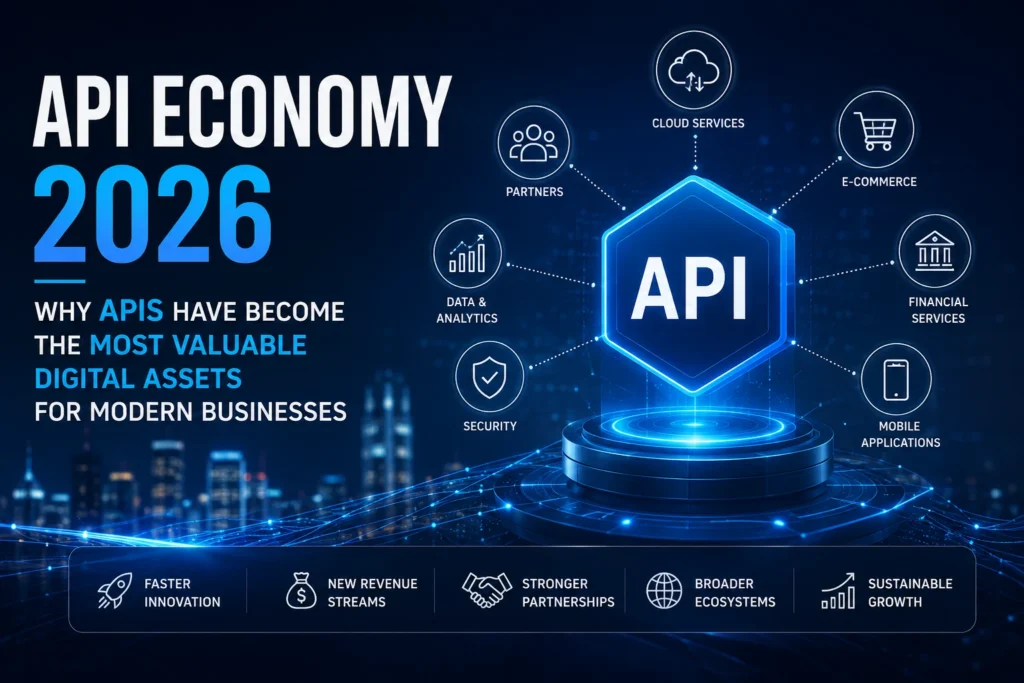
API Economy 2026: Why APIs Have Become the Most Valuable Digital Assets for Modern Businesses
“`html
The API Economy in 2026: Turning Digital Capabilities into Business Growth
How Companies Are Creating New Revenue Streams, Faster Innovation, and Stronger Digital Ecosystems
In the past, businesses viewed APIs (Application Programming Interfaces) as technical tools used by developers to connect software systems.
Today, that perception has completely changed.
In 2026, APIs are no longer just integration tools.
They have become business products.
Companies are generating millions of dollars through API-based services, building partner ecosystems, enabling digital innovation, and accelerating product development through strategic API programs.
This transformation has given rise to what industry experts call the API Economy.
Organizations that understand and leverage APIs effectively are creating competitive advantages that extend far beyond technology.
What Is the API Economy?
The API Economy refers to the exchange of data, services, and capabilities between businesses through APIs.
Instead of building every capability internally, organizations expose specific services that other applications, partners, and platforms can consume.
- Payment processing APIs
- Healthcare data APIs
- Logistics APIs
- Mapping APIs
- Authentication APIs
- Financial services APIs
APIs have become digital building blocks that enable businesses to collaborate, innovate, and monetize capabilities at scale.
Why APIs Are More Important Than Ever
Customers expect seamless experiences across:
- Mobile apps
- Web platforms
- Wearable devices
- Smart devices
- Third-party services
Delivering these experiences requires systems to communicate instantly and securely.
APIs make this possible.
Without APIs, digital ecosystems simply cannot function efficiently.
The Shift from Software Products to Digital Platforms
One of the biggest business transformations happening today is the move from standalone products to interconnected platforms.
Traditional Model:
Business → Product → Customer
Modern Platform Model:
Business → API Ecosystem → Partners + Developers + Customers
This shift increases:
- Market reach
- Innovation speed
- Revenue opportunities
- Customer engagement
Why the API Economy Is Growing in 2026
Cloud-Native Development
- Microservices
- Cloud infrastructure
- Distributed architectures
APIs serve as the communication layer connecting these systems.
AI Integration Demand
AI services rely on APIs to:
- Access data
- Execute workflows
- Connect external systems
- Deliver intelligent experiences
Growth of Digital Partnerships
APIs allow companies to:
- Share services securely
- Integrate partner solutions
- Launch new offerings quickly
Real-World Business Examples
Financial Services
- Payments
- Account verification
- Transaction processing
- Financial analytics
Healthcare
- Electronic Health Records (EHRs)
- Telemedicine platforms
- Insurance systems
- Patient applications
E-Commerce
- Product catalogs
- Inventory management
- Shipping services
- Payment processing
Technologies Powering the API Economy
- Postman
- Kong Gateway
- Apigee
These solutions help organizations manage, secure, monitor, and scale APIs efficiently.
API Monetization: A New Revenue Model
Popular monetization models include:
- Subscription Access – Monthly API access fees
- Usage-Based Pricing – Pay per API request
- Premium Services – Advanced paid features
- Partner Programs – Revenue-sharing ecosystems
For many technology companies, APIs have become standalone products.
Benefits of Strong API Strategies
- Faster Innovation
- Reduced Development Costs
- Improved Customer Experience
- New Revenue Opportunities
API-First Development
Leading organizations are adopting an API-first approach by designing APIs before building applications.
Benefits include:
- Better scalability
- Easier integrations
- Faster development cycles
- Improved collaboration
Challenges Businesses Must Address
Security Risks
Strong authentication, authorization, and monitoring are essential.
Governance Complexity
- Version control
- Documentation
- Performance standards
- Access policies
Scalability Requirements
Infrastructure must be designed to handle millions of API requests efficiently.
The Future of the API Economy
APIs will become even more important because of:
- AI adoption
- IoT growth
- Digital ecosystems
- Industry interoperability
- Platform business models
Businesses will increasingly compete based on how effectively they expose and consume digital capabilities.
The strongest organizations may be those with the most valuable API ecosystems.
How Our Company Helps
We help organizations design, develop, and manage modern API-driven architectures.
- API strategy consulting
- API-first development
- Cloud-native architecture
- System integration
- API security and governance
- Microservices implementation
Final Thoughts
The API Economy is reshaping how businesses create value in the digital era.
APIs are no longer simply technical interfaces. They are strategic business assets that drive innovation, partnerships, scalability, and revenue growth.
Organizations that embrace API-first thinking today will be better positioned to lead tomorrow’s connected digital economy.
In 2026, the most successful businesses are not just building applications. They are building ecosystems.