
Android vs iOS App Development: Which One Should You Choose in 2026?
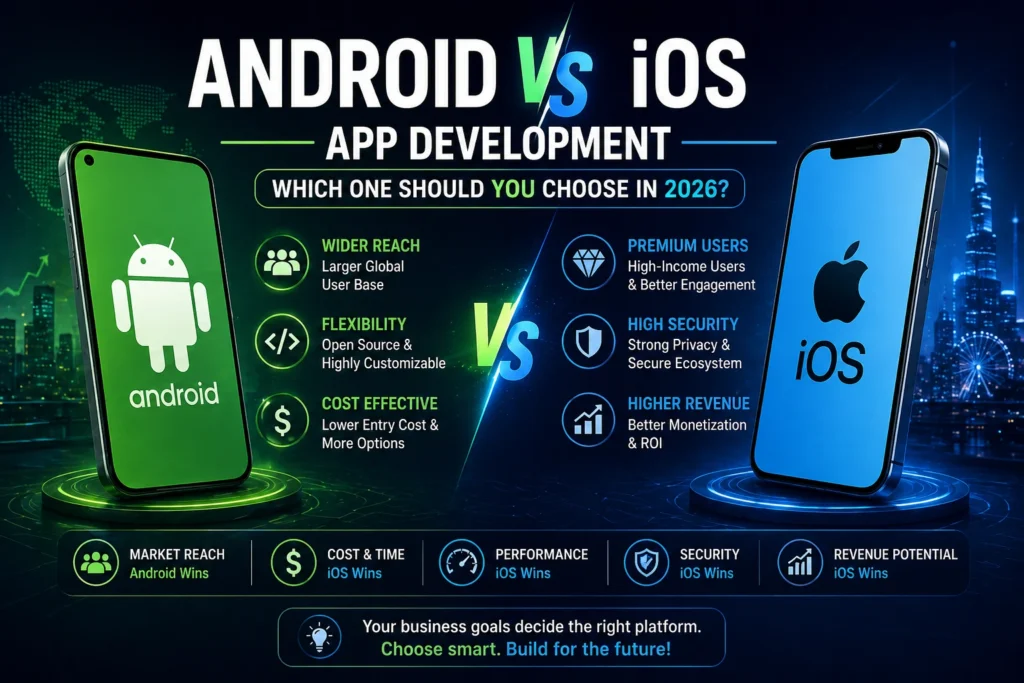
Android vs iOS App Development: Which One Should You Choose in 2026?
In 2026, mobile apps continue to dominate the digital landscape, driving business growth, customer engagement, and revenue.
One of the most critical decisions for startups and businesses is choosing between Android app development and
iOS app development.
Both platforms offer unique advantages, but the right choice depends on your target audience, budget, and business goals.
In this guide, we break down the key differences to help you make an informed decision.
1. Market Share and Audience Reach
Android continues to lead globally with a larger market share, especially in regions like Asia, Africa, and South America.
On the other hand, iOS dominates in premium markets such as North America and parts of Europe.
- Android: Larger audience reach, ideal for mass-market apps
- iOS: High-income users, better for premium products
2. Development Cost and Time
When it comes to mobile app development cost in 2026, Android apps typically require more time due to device
fragmentation and testing across multiple screen sizes.
- Android: Higher development time due to device diversity
- iOS: Faster development with fewer devices to support
3. App Development Technologies
Choosing the right technology stack plays a crucial role in app performance and scalability.
- Android: Kotlin, Java
- iOS: Swift, Objective-C
- Cross-platform: React Native, Flutter (gaining massive popularity in 2026)
4. Revenue and Monetization
If your focus is on monetization, iOS often generates higher revenue per user compared to Android.
- iOS: Strong in-app purchases and subscription revenue
- Android: Higher downloads but lower average spending
5. App Security
Security is a growing concern in 2026, especially with increased cyber threats.
- iOS: Closed ecosystem, stronger security
- Android: More flexible but relatively higher security risks
6. App Approval and Publishing
Publishing your app is easier on Android compared to iOS.
- Android: Faster approval process
- iOS: Strict review guidelines, higher quality control
7. Performance and User Experience
Both platforms offer excellent performance, but iOS often delivers a more consistent user experience due to hardware-software integration.
- iOS: Smooth performance and optimized UX
- Android: Performance varies across devices
Android vs iOS: Quick Comparison
| Factor | Android | iOS |
|---|---|---|
| Market Share | Higher globally | Strong in premium markets |
| Development Cost | Higher | Lower |
| Revenue Potential | Moderate | High |
| Security | Moderate | High |
| Time to Market | Longer | Faster |
Which One Should You Choose in 2026?
The right choice depends on your business goals:
- Choose Android app development if you want a wider audience reach and lower entry barriers.
- Choose iOS app development if your focus is on premium users and higher revenue.
- Choose cross-platform app development if you want to target both platforms with a single codebase.
Final Thoughts
In 2026, there is no one-size-fits-all answer to the Android vs iOS debate. The best platform depends on your
target market, budget, and long-term strategy.
For many businesses, a hybrid or cross-platform approach offers the perfect balance between cost, speed, and reach.
Carefully evaluate your requirements before making a decision.