
Quantum Computing in 2026: Why Businesses Are Preparing for the Next Computing Revolution
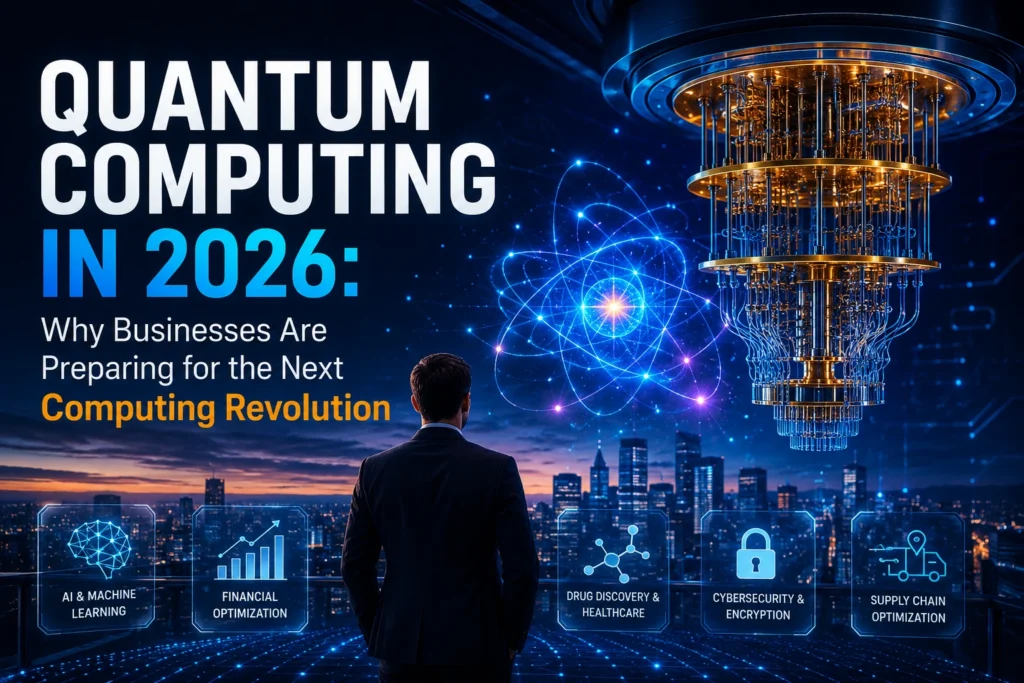
Quantum Computing in 2026: How Quantum Technology Could Transform the Future of Business and Innovation
For decades, technological progress has been driven by traditional computing.
From smartphones and cloud infrastructure to artificial intelligence and big data analytics, nearly every digital system today relies on classical computers processing information in binary form:
0s and 1s.
But as business problems become more complex, classical systems are approaching practical limitations in areas such as:
- Large-scale optimization
- Advanced simulations
- Cryptography
- Molecular modeling
- Massive AI computation
This is why one of the most transformative technology trends of the next decade is gaining enormous attention in 2026:
Quantum Computing
Although still in its early stages, quantum computing has the potential to redefine entire industries by solving problems that are nearly impossible for classical systems.
What Is Quantum Computing?
Quantum computing is a new type of computation based on principles of quantum mechanics.
Unlike classical computers that process data using binary bits (0 or 1), quantum computers use:
Qubits
Qubits can exist in multiple states simultaneously through a phenomenon called:
Superposition
Quantum systems also use:
Entanglement
where qubits become interconnected, enabling highly complex computations at extraordinary speeds.
This allows quantum computers to process certain types of problems exponentially faster than traditional systems.
Why Quantum Computing Is Trending in 2026
1. Classical Computing Limits Are Emerging
Modern AI, optimization, and simulation workloads are becoming increasingly resource-intensive.
Certain problems may require:
- Years of processing time
- Massive energy consumption
- Extremely large infrastructure clusters
Quantum systems offer potential breakthroughs in computational efficiency for specific workloads.
2. AI & Advanced Analytics Demand More Computational Power
AI systems continue growing in complexity.
Quantum computing could eventually improve:
- Machine learning optimization
- Neural network training
- Complex pattern recognition
This could dramatically accelerate future AI capabilities.
3. Governments & Enterprises Are Investing Heavily
Global investments in quantum research are increasing rapidly across:
- Governments
- Research institutions
- Technology companies
- Financial organizations
Organizations are preparing early to avoid falling behind in what many consider the next computing revolution.
How Quantum Computing Differs from Classical Computing
| Classical Computing | Quantum Computing |
|---|---|
| Uses binary bits | Uses qubits |
| Sequential processing limitations | Parallel quantum state processing |
| Efficient for general tasks | Efficient for highly complex calculations |
| Mature ecosystem | Emerging ecosystem |
Quantum computing is not expected to replace classical systems entirely — it will complement them for specialized problems.
Real-World Business Use Cases
Financial Services
Financial institutions are exploring quantum systems for:
- Portfolio optimization
- Risk analysis
- Fraud detection
- Market simulation
Complex financial models could potentially run far faster than today’s systems.
Healthcare & Drug Discovery
Quantum simulations may significantly improve:
- Molecular modeling
- Drug discovery
- Protein analysis
- Personalized medicine research
Traditional simulations often require enormous computational resources.
Supply Chain Optimization
Global logistics networks involve highly complex optimization problems.
Quantum systems could improve:
- Route optimization
- Inventory planning
- Resource allocation
at unprecedented scale and speed.
Cybersecurity & Cryptography
Quantum computing presents both opportunities and risks for cybersecurity.
It could eventually:
- Break some traditional encryption methods
- Enable new forms of quantum-safe cryptography
This is why businesses are already preparing for:
Post-Quantum Security
Technologies and Platforms Driving Quantum Innovation
Major technology companies are investing heavily in quantum ecosystems such as:
- IBM Quantum
- Google Quantum AI
- Microsoft Azure Quantum
These platforms are helping researchers and enterprises experiment with quantum applications through cloud access.
The Current Reality: Quantum Computing Is Still Emerging
Despite the excitement, quantum computing is still in an early development stage.
Current limitations include:
- Hardware instability
- Error correction challenges
- Limited large-scale production systems
- High operational complexity
Most enterprise use cases today remain experimental rather than fully commercialized.
Early adoption and preparation are becoming strategically important.
Data Insight: Why Enterprises Are Paying Attention
Businesses view quantum computing not only as a future technology — but as a long-term competitive advantage.
Organizations investing early are aiming to gain future leadership in areas such as:
- Advanced AI
- Scientific simulation
- Optimization systems
- Cryptography
The companies that understand quantum systems early may dominate future high-computation industries.
Quantum Computing and Artificial Intelligence
One of the most exciting areas is the intersection of:
Quantum + AI
Potential future applications include:
- Faster AI model optimization
- Improved data pattern analysis
- Advanced predictive modeling
This emerging field is often called:
Quantum Machine Learning (QML)
While still experimental, it represents enormous long-term potential.
Challenges Businesses Must Consider
Talent & Expertise Shortage
Quantum computing requires highly specialized knowledge across:
- Physics
- Mathematics
- Computer science
Skilled professionals remain limited globally.
Infrastructure Complexity
Quantum hardware requires highly controlled environments, including extreme cooling systems.
Uncertain Commercial Timelines
Widespread enterprise adoption may still take years, depending on technological breakthroughs.
Why Businesses Should Start Preparing Now
Even though mainstream adoption is still evolving, organizations should begin:
- Understanding quantum fundamentals
- Monitoring industry developments
- Evaluating future use cases
- Preparing cybersecurity strategies for post-quantum encryption
Businesses that wait too long may struggle to adapt later.
How Our Company Helps Businesses Prepare for Future Technologies
At our company, we help organizations stay ahead of emerging technology trends and future digital transformation opportunities.
Our expertise includes:
- Advanced technology consulting
- AI and next-generation computing strategies
- Scalable digital infrastructure
- Innovation-focused architecture planning
We help businesses prepare for technologies that will shape the next decade.
Final Thoughts
Quantum Computing represents one of the most ambitious technological shifts of the modern era.
While still developing, its long-term potential could redefine industries including:
- Finance
- Healthcare
- AI
- Logistics
- Cybersecurity
Organizations that begin understanding and preparing for quantum technologies today will be better positioned for the next generation of digital innovation.
In the future, competitive advantage may not depend only on who has the most data, but on who has the most powerful way to process it.