
Digital Twin Technology in 2026: How Businesses Are Simulating the Future Before It Happens
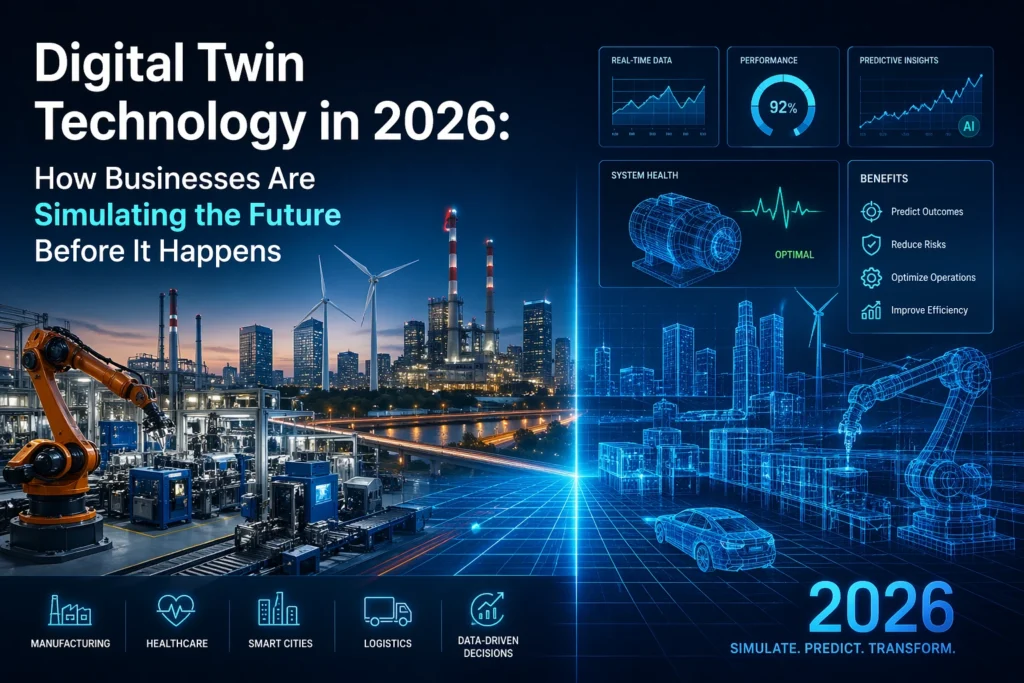
From Manufacturing to Smart Cities: A New Era of Data-Driven Innovation
In 2026, one of the most powerful and rapidly growing technologies is Digital Twin.
Imagine being able to create a virtual replica of your business, product, or system, and test decisions before applying them in the real world.
That’s exactly what digital twin technology enables.
Businesses are now using digital twins to reduce risk, improve efficiency, and make smarter decisions using real-time data.
What Is Digital Twin Technology?
A Digital Twin is a virtual model of a physical object, system, or process.
This model is continuously updated using real-time data from sensors, software systems, and user interactions.
It allows businesses to simulate, monitor, and optimize real-world operations digitally.
How Digital Twins Work
- Physical Asset
The real-world system (machine, building, process) - Data Collection
Sensors and systems collect real-time data - Digital Model
A virtual replica that mirrors real-world behavior - Analytics & Simulation
AI and analytics predict outcomes and optimize performance
Why Digital Twin Is Trending in 2026
1. Shift Toward Predictive Decision-Making
Businesses are moving from:
❌ Reactive decisions (after problems occur)
to
✅ Predictive decisions (before problems happen)
Digital twins allow companies to test scenarios and predict outcomes in advance.
2. Explosion of IoT and Real-Time Data
With the growth of connected devices, businesses now have access to massive real-time data streams.
- Monitor systems continuously
- Detect anomalies early
- Improve operational efficiency
3. Cost Reduction & Risk Management
Instead of experimenting in the real world (which can be expensive), businesses simulate changes digitally.
- Reduce operational risks
- Minimize downtime
- Lower maintenance costs
Real-World Use Cases
Manufacturing
- Optimize production performance
- Predict machine failures
- Reduce downtime
Healthcare
- Personalized treatment plans
- Predictive diagnostics
Smart Cities
- Manage traffic systems
- Optimize energy usage
- Improve infrastructure planning
Logistics & Supply Chain
- Predict delays
- Optimize routes
- Improve efficiency
Technologies Powering Digital Twins
- Azure Digital Twins
- Siemens MindSphere
- IBM Watson IoT
Data Insight: Business Impact
- Improved operational efficiency (up to 25–30%)
- Reduced maintenance costs
- Faster decision-making
- Better resource utilization
The ability to simulate outcomes before execution gives businesses a strong competitive advantage.
Key Benefits of Digital Twins
- Real-Time Monitoring: Track performance continuously
- Predictive Maintenance: Fix issues before failures occur
- Scenario Simulation: Test decisions without real-world risk
- Improved Efficiency: Optimize processes using data insights
Challenges to Consider
- High initial setup cost
- Integration complexity
- Data accuracy requirements
Success depends on strong data infrastructure and strategy.
When Should Businesses Adopt Digital Twin Technology?
- Operate complex systems
- Rely on real-time data
- Want predictive insights
- Aim to optimize operations
How Our Company Helps Build Digital Twin Solutions
At our company, we help businesses leverage digital twin technology for smarter operations.
- Digital twin architecture design
- IoT integration
- Real-time data analytics
- Simulation and optimization systems
We help you move from guesswork to data-driven precision.
Final Thoughts
Digital Twin Technology is transforming how businesses operate in 2026.
- Predict outcomes
- Optimize decisions
- Reduce risks
- Improve efficiency
In the future, the most successful businesses won’t just operate in the real world — they’ll operate in both physical and digital worlds simultaneously.